
The early years of a child’s life are often called the “formative years”—and for good reason. During this period, a child’s brain is developing at a rapid pace, forming neural connections that set the foundation for cognitive, social, emotional, and physical growth. One of the most influential elements in this process is the nursery class syllabus.
A well-structured nursery curriculum isn’t just about teaching the alphabet or colors—it’s about engaging a child’s mind in meaningful ways that promote holistic development. In this blog, we explore how a carefully designed nursery class syllabus, along with LKG and KG syllabuses, shapes early brain development and prepares children for lifelong learning.
Why Early Brain Development Matters?
Between birth and age five, a child’s brain undergoes dramatic growth. By the time they are 3 years old, a child’s brain has developed up to 80% of its adult size. The experiences they encounter during this period directly influence:
Cognitive abilities
Emotional resilience
Language development
Motor skills
Social interaction
A stimulating and age-appropriate curriculum at the nursery, LKG, and KG levels ensures that these areas are nurtured in the right way and at the right time.
What Is Taught in the Nursery Class Syllabus?
The LKG syllabus typically caters to children aged 2.5 to 4 years and focuses on developing foundational skills. While each school may have a unique approach, the core components include:
1. Language & Literacy Skills
Introduction to alphabets (A–Z)
Vocabulary building through rhymes, songs, and storytelling
Pre-writing skills (scribbling, pattern drawing)
2. Numeracy Skills
Number recognition (1–10)
Counting with objects
Basic shapes and sizes
Concept of big/small, more/less
3. Motor Skill Development
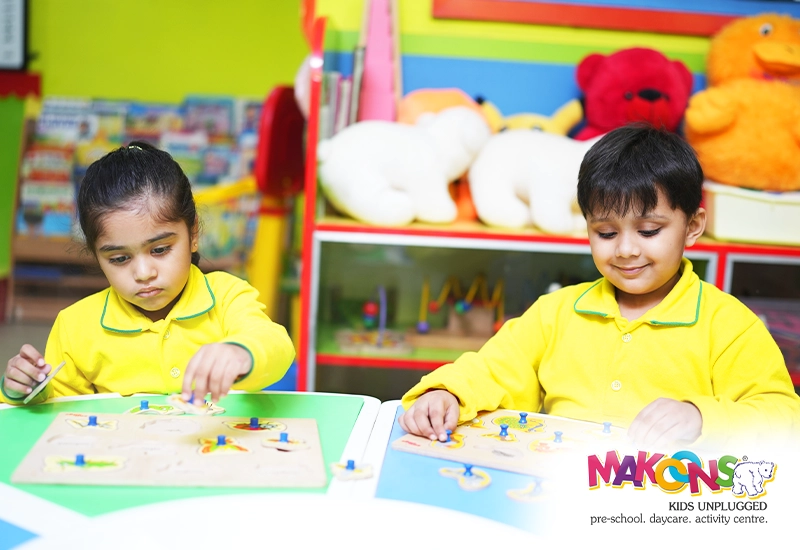
Fine motor skills: holding crayons, buttoning, puzzles
Gross motor skills: jumping, climbing, running
4. Cognitive & Sensory Skills
Sorting and matching
Identifying colors and animals
Use of sensory activities (sand play, water play, texture exploration)
5. Social & Emotional Learning
Taking turns
Following simple instructions
Sharing with peers
Expressing feelings through actions or words
How the Nursery Syllabus Impacts Brain Development
Each part of the nursery curriculum is aligned with brain development milestones. Here’s how:
Language and Communication
When children sing rhymes or listen to stories, the brain strengthens its language-processing areas, laying the groundwork for reading, speaking, and listening.
Cognitive Thinking
Activities like puzzles or sorting teach children about logic, problem-solving, and memory—all essential cognitive skills.
Motor Coordination
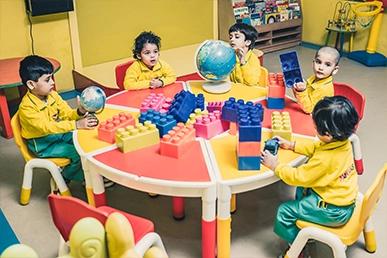
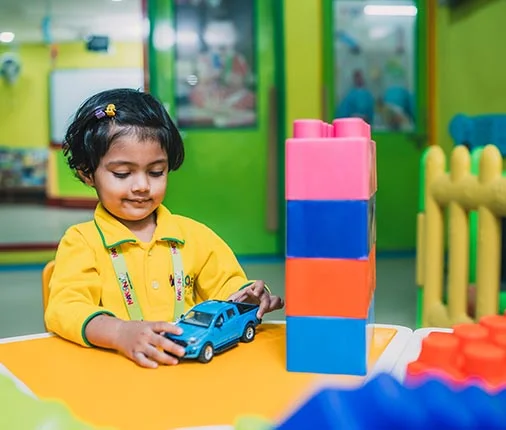
Cutting with scissors or stacking blocks develops neural pathways related to motor control and spatial awareness.
Emotional & Social Intelligence
Group activities and guided play help kids understand emotions, build empathy, and form secure attachments—all critical for long-term emotional well-being.
Building Upon the Foundation: LKG and KG Syllabus
The transition from nursery to LKG (Lower Kindergarten) and KG (Kindergarten) is crucial. Here's how the curriculum evolves:
LKG Syllabus Highlights (Ages 3.5–4.5)
Letter tracing and phonics
Counting up to 50
Basic additions
Hindi alphabet introduction
Conceptual themes (transport, seasons, animals)
KG Syllabus Highlights (Ages 4.5–5.5)
Sentence formation
Basic grammar
Two-digit numbers, subtraction
Environmental studies
Science exploration (plants, body parts, weather)
Both levels reinforce early learning while preparing children for primary school. Each stage builds upon the previous one, strengthening brain function and intellectual confidence.
Modern Approaches to Early Curriculum Design
Today, many schools integrate methodologies such as:
Montessori
Waldorf
Reggio Emilia
Play-based learning
Thematic teaching models
These methods emphasize experiential learning, emotional connection, and cognitive stimulation—all aligned with early childhood brain development science.
Tips for Parents
Engage at home: Reinforce syllabus topics with fun home activities.
Be patient: Learning is gradual. Every child develops at their own pace.
Create a routine: Predictability supports emotional regulation and learning.
Celebrate small wins: Encouragement boosts brain pathways tied to motivation.
Final Thoughts
The nursery class syllabus, along with LKG and Kindergarten syllabus, plays a pivotal role in shaping the way children learn, think, and interact with the world. Far from being a simple introduction to academics, it lays the neurological and emotional foundation for future success.
Choosing a school with a well-rounded, research-backed curriculum can make all the difference in your child’s early years. As educators and parents, our job is to nurture not just smart students—but happy, confident learners for life.



Write a comment ...